A relocating buyer comparing Four Seasons Private Residences to The Residences at Broadwest usually starts with the same assumption: pay more, get more. More brand, more service, more certainty that the unit will hold its value and move when it's time to sell.
That assumption breaks down almost immediately once you look at how these two buildings actually trade. Four Seasons commands a median $1,531 per square foot, roughly 60 percent above Broadwest's $913 median. But Broadwest is the more liquid asset. Units there sell in an average of 48 days. At Four Seasons, the average stretches to 93. Over a recent 12-month stretch, Broadwest closed 17 sales out of its 196 units. Four Seasons closed 8 out of 144. The building with the bigger name and the bigger price tag is the slower mover.
That inversion is the real story for anyone comparing Downtown Nashville's two hotel-branded towers, and it changes how a buyer or seller should think about carrying costs, financing, and exit timing at each address.
The Sticker Price Isn't the Full Picture
Four Seasons Private Residences at 100 Demonbreun sits above the Four Seasons Hotel in a 40-story tower completed in 2022. There are only 143 residences, and Four Seasons operates roughly 45 private residence addresses worldwide, so owning one here means owning a genuinely scarce product. That scarcity, plus the global brand, is what the $1,531 per square foot median is paying for.
Broadwest, a 34-story tower at 1616 West End Avenue with the Conrad Nashville hotel on its lower floors, delivers a similar hotel-residential model at a lower price tier. Its $913 median per square foot reflects a strong but less rarefied brand and a larger pool of 196 units. Both buildings put residents behind a separate entrance and elevator core from hotel guests. Both offer access to hotel services. The price gap between them is almost entirely about brand tier and unit scarcity, not a meaningful difference in the physical product.
Once you accept that the price difference is a brand premium and not a quality difference, the next question is what that premium actually buys. The answer, based on how these buildings trade, is not liquidity.
The Liquidity Inversion
Small, ultra-luxury buildings are inherently thin markets. Four Seasons has 143 units competing for a buyer pool willing to pay seven figures for a globally branded address in Nashville. That pool is smaller than the pool willing to spend $800,000 to $1.4 million at Broadwest for the same hotel-service lifestyle at a more approachable price point.
The math bears this out. Both buildings currently sell at roughly the same percentage of original list price, in the 94 to 95 percent range, so neither is discounting harder to move inventory. The difference is entirely in time to contract. A seller at Broadwest can reasonably expect a faster process. A seller at Four Seasons should plan for a longer runway, not because the building is a weaker asset, but because the buyer pool who can write that check is smaller and slower to materialize.
| Four Seasons Private Residences | The Residences at Broadwest | |
|---|---|---|
| Address | 100 Demonbreun Street | 1616 West End Avenue |
| Hotel brand | Four Seasons | Conrad Nashville (Hilton) |
| Total condo units | 143 | 196 |
| Median price per sqft | $1,531 | $913 |
| Average HOA (recent closed sales) | ~$2,811/mo | ~$1,295/mo |
| Average annual property tax | ~$16,000 | ~$7,000 |
| Average days on market | 93 | 48 |
| Closed sales, trailing 12 months | 8 | 17 |
For a buyer thinking about eventual resale, this table says something the price-per-square-foot number alone does not: the branded premium at the top of the market buys exclusivity and prestige, not speed. A buyer who needs to sell within a specific window should weight that difference as heavily as the purchase price itself.
The HOA Fee Buys Less Than It Sounds Like
The dues gap between the two buildings is almost as wide as the price gap. Four Seasons HOA fees average around $2,811 a month based on recent closed sales, ranging from roughly $1,671 to $4,754 depending on unit size. Broadwest runs lower, averaging around $1,295 a month across a range of $773 to $2,183.
What surprises out-of-state buyers at both buildings is what that fee does not include. Neither HOA bundles hotel services into the monthly dues. Room service, housekeeping, valet parking, and in-residence dining are all billed separately, on an a la carte basis, on top of the HOA payment. A buyer who assumes a $2,800 monthly fee at Four Seasons means full concierge living without further cost is budgeting incorrectly from day one.
A few other costs catch buyers off guard at both buildings:
- Property taxes run meaningfully higher than many out-of-state buyers expect. Recent closed sales put the average near $16,000 a year at Four Seasons and around $7,000 a year at Broadwest, a gap that tracks the price difference between the buildings but still surprises buyers moving from lower-tax states.
- HOA transfer fees and working capital contributions typically apply at closing at both buildings, adding a one-time cost beyond the purchase price.
- Parking beyond the unit's included space carries an additional monthly charge at both properties.
- Hotel services are priced individually. A owner who wants weekly housekeeping or regular valet use should model that as a recurring line item, not an amenity already covered by the dues.
None of this makes either building a bad purchase. It does mean the advertised HOA figure is a floor, not a ceiling, on what full-service living actually costs each month.
The Financing Wall Both Buildings Share
Hotel-residential mixed-use buildings do not qualify for FHA project certification, so buyers at Four Seasons and Broadwest are limited to cash, conventional financing, or jumbo loans. Neither building offers the 3.5 percent down FHA path available in some of Nashville's other condo towers. For 2026, the Davidson County FHA loan limit sits at $1,029,250, which is already below entry pricing at Four Seasons and well below the median at both properties, so the restriction mostly narrows the buyer pool at the very top of the market rather than changing the math for a typical purchase.
This financing constraint is part of why the buyer pool at Four Seasons in particular stays thin. A cash-heavy or jumbo-qualified buyer base is a smaller universe than the broader mortgage market, and that scarcity shows up directly in the 93-day average time on market.
What's Changing the Math
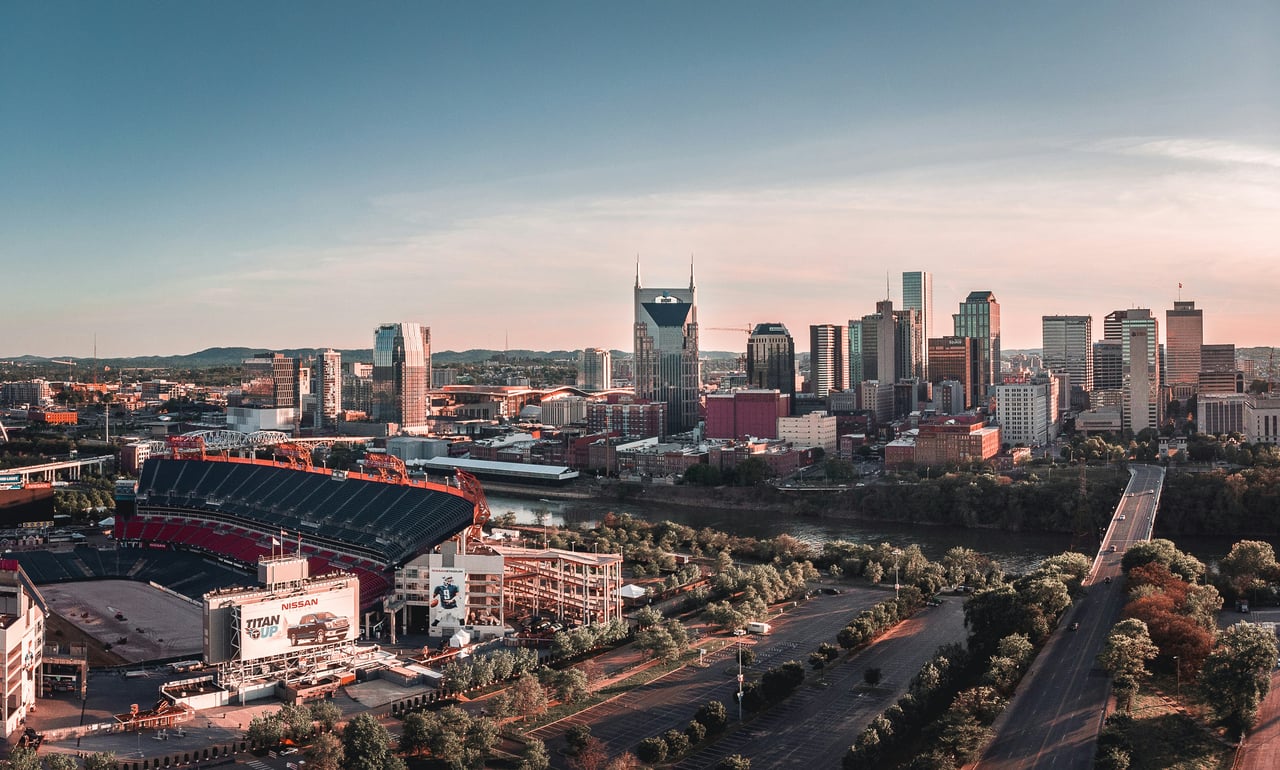
Two developments are worth watching if you're weighing either building for the next several years. Across the Cumberland River from Four Seasons, construction on the enclosed Titans stadium topped out in late 2025 and is on track for a 2027 opening. Upper-floor units at Four Seasons with river and stadium-facing orientations sit closer to that transformation than any other residential building in the city, and how that translates into resale value will depend heavily on how the surrounding East Bank district fills in over the next several years.
At the same time, the branded-residence tier is about to get more crowded. The Pendry Residences and Edition Residences are both under construction in The Gulch with deliveries targeted for 2026 through 2028, and Belle Meade's low-rise Manning development offers a gated, boutique alternative to the downtown high-rise model at a comparable price per square foot. Buyers currently weighing Four Seasons against Broadwest should know they won't be the only two options in the branded tier for much longer.
A Few Direct Questions
Does the HOA fee at Four Seasons or Broadwest include hotel services? No. Both buildings bill room service, housekeeping, and valet separately from the monthly HOA dues, which cover building operations, staffing, and reserves rather than a la carte guest services.
Can I finance a purchase at either building with an FHA loan? No. Hotel-residential mixed-use buildings are excluded from FHA project certification, so financing options are limited to cash, conventional loans, or jumbo loans regardless of purchase price.
Which building is the better investment? It depends on what you're optimizing for. Four Seasons holds the higher price per square foot and the greater scarcity value, but its smaller buyer pool means a longer average time to sell. Broadwest trades at a lower price point with a faster resale pace and a larger comparable-sales base to price against.
Whether you're evaluating a specific unit at either tower or trying to time a sale around what's coming to the East Bank, the numbers behind the sticker price matter more than the sticker price itself. Gary Ashton and the team work through this kind of building-level detail with clients every day across Nashville's high-rise market. Get Your Home Featured and let's talk through what your specific unit or search actually requires.