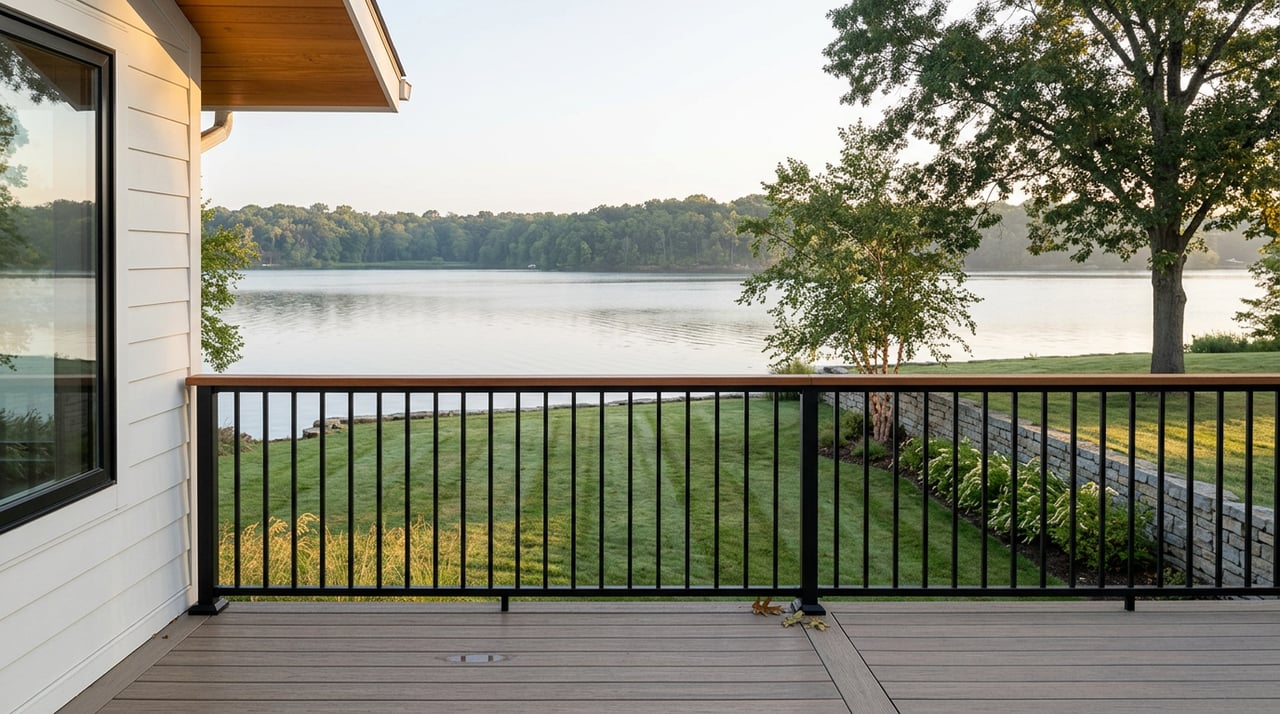
The final walkthrough on a lakefront closing usually goes the same way. The buyer walks the dock, checks the lift, maybe steps onto the swim platform and looks out at the water they are about to own. Nobody walks away from that moment thinking there is still a piece of paper standing between them and full use of the thing they just paid for.
There is. The dock itself sits on federal land. The permit that allows it to exist is issued to a person, not attached to the deed, and it does not follow the sale unless someone actually asks for it to.
That single fact reshapes how a lakefront purchase on Old Hickory Lake should be handled, and it is the piece most buyers, and more than a few agents outside this specific market, get wrong before they ever sit down at the closing table.
The permit follows the owner, not the parcel
Old Hickory Lake is a 22,500-acre reservoir formed by damming the Cumberland River, with construction finishing in 1954. It is operated and supervised by the U.S. Army Corps of Engineers under the direction of the District Engineer at Nashville, a detail worth sitting with because it contradicts what a lot of people assume about Tennessee lakes.
Ask most newcomers who regulates the shoreline and they will guess TVA. It is a reasonable guess. TVA runs the shoreline permitting for reservoirs on the Tennessee River system, and TVA's name is attached to enough of Tennessee's lake culture that people default to it. Old Hickory sits on the Cumberland River, not the Tennessee, which puts it under the Corps of Engineers instead, following its own shoreline management plan rather than TVA's Section 26a rules. Even some closing professionals in this market have described the shoreline as TVA-controlled in their own client materials, when the actual permitting authority for Old Hickory is the Corps.
That distinction is not academic. The Corps' own operational management plan for Old Hickory Lake states plainly that shoreline construction, private dock permits, and mowing privileges are governed by conditions the Corps sets, not automatically inherited by whoever holds the deed. A dock that has sat on that shoreline for decades, permitted correctly the entire time, does not transfer its permit to a new owner just because the sale closes. The new owner has to ask.
What a seller should hand over before the sign goes in the yard
The smart move, and the one that prevents a permit problem from surfacing during due diligence instead of before it, is for the seller to confirm the dock's status before the property is marketed at all. In practice on this lake that means requesting what closing professionals here often call a Realtor Letter: a short written confirmation from the Corps' Old Hickory Lake Resource Manager's Office stating whether the existing dock, lift, and any shoreline stairs or utility lines are currently in compliance.
A seller who has this letter in hand before showings start is offering something concrete. A buyer who asks for it and does not get a clear answer has just learned something important about the property before they are locked into a contract.
Before listing, a seller on Old Hickory Lake should be able to produce:
- Confirmation from the Corps' Resource Manager's Office that the dock, lift, and any shoreline structures match what was originally permitted
- Documentation of any repairs or modifications made since the last Corps inspection
- A clear answer on whether the parcel sits in a zone the Corps' shoreline allocation map designates for private docks, since roughly half the lake's shoreline is classified as Limited Development Area, some of it unsuitable for moorage because of steep bluffs, narrow coves, or shallow water regardless of what has been built there historically
That last point matters more than it sounds. A dock that exists does not always mean a dock that was ever supposed to exist there. Grandfathering protects docks that were lawfully installed decades ago, but grandfathered status is not the same as automatic renewal for a new owner, and it is not the same as permission to expand or rebuild without a fresh review.
What a buyer should budget beyond the purchase price
Once a buyer is under contract, the paperwork does not end at signing. The realistic add-on costs for a lakefront closing on Old Hickory Lake typically include a boundary survey to confirm exactly where private land ends and Corps property begins, generally landing between $500 and $1,500, and a dock inspection in the $200 to $500 range if one has not already been completed. Buyers who treat these as optional line items are the ones who find out after closing that their dock needs work the seller never disclosed because the seller never had it inspected either.
Closing agents in this market generally advise the new owner to file the Corps permit change request within the first couple of weeks after closing rather than letting it sit. The Corps does not chase down new owners. The obligation runs the other way.
What the price gap between lakefront, lake-access, and lake-view actually reflects
Hendersonville buyers searching for anything on the water quickly discover that "on Old Hickory Lake" covers three very different products, and the price gap between them is not just about the view.
| Tier | What you get | Typical entry price |
|---|---|---|
| Lakefront with private dock | Direct shoreline lot, individually permitted dock | Roughly $700,000 to $800,000 for modest, older construction, climbing well past $3 million for larger or newer estates |
| Lake-access (shared dock or community moorage) | Neighborhood or HOA-controlled water access, no private dock permit to manage | Generally priced closer to standard Hendersonville homes, with a moderate premium over comparable non-lake properties |
| Lake-view only | Visual proximity to the water, no moorage rights | A modest premium over comparable homes with no lake relationship at all |
Part of that lakefront premium is the view. Part of it is that a permitted, well-documented private dock is a genuinely scarce asset on federally managed water, one the Corps is not handing out freely to new applicants. Community and shared-access arrangements exist precisely because individual permits are not always available, and buyers comparing the tiers should understand they are paying for permitted, private moorage as much as they are paying for waterfront square footage.
Why the Foxland Harbor Marina approval matters even if you never use it
In 2025 the Corps approved plans for Foxland Harbor Marina near Gallatin, the first new marina on Old Hickory Lake in nearly seventy years, with 184 boat slips, a dry dock, and a fuel dock planned for a site that currently holds the Station Camp Creek public boat launch. That approval is worth knowing about even for a buyer with no interest in a slip there, because it signals the Corps is still actively reviewing and issuing new water-use permits on this lake rather than treating the shoreline as closed to further development. It is a reminder that permitting on Old Hickory Lake is a live, ongoing regulatory process, not a fixed inventory frozen in time.
A short FAQ
Can I add a dock to a lakefront lot that does not currently have one? Only if the Corps' shoreline allocation map shows that stretch of shoreline as open to private moorage. Roughly half the lake's shoreline is designated Limited Development, and some of that is unsuitable for docks regardless of zoning because of water depth or navigation concerns.
What if the dock on the property I want to buy was never actually permitted? This happens more than buyers expect on older lake properties. An unpermitted structure is a Corps compliance issue the new owner inherits, which is exactly why confirming status before closing, not after, protects you.
Does the same rule apply on the Old Hickory community side of the lake in Davidson County? The Corps governs the water and shoreline on both sides. The difference is that the Davidson County side layers in Metro Nashville's residential building permit process for anything built on land, meaning a project there can require two separate approvals on two separate timelines rather than one.
A lakefront purchase on Old Hickory Lake is still one of the better lifestyle investments in Middle Tennessee. It is just not a transaction where the dock takes care of itself. Knowing which agency to call, which letter to ask for, and which zone your lot sits in before you write an offer is the difference between a smooth closing and a permit problem you discover from your own kitchen window.
If you are weighing a lakefront purchase or preparing to list one, Gary Ashton and the team can walk you through exactly what the Corps will want to see before your closing date is ever set.