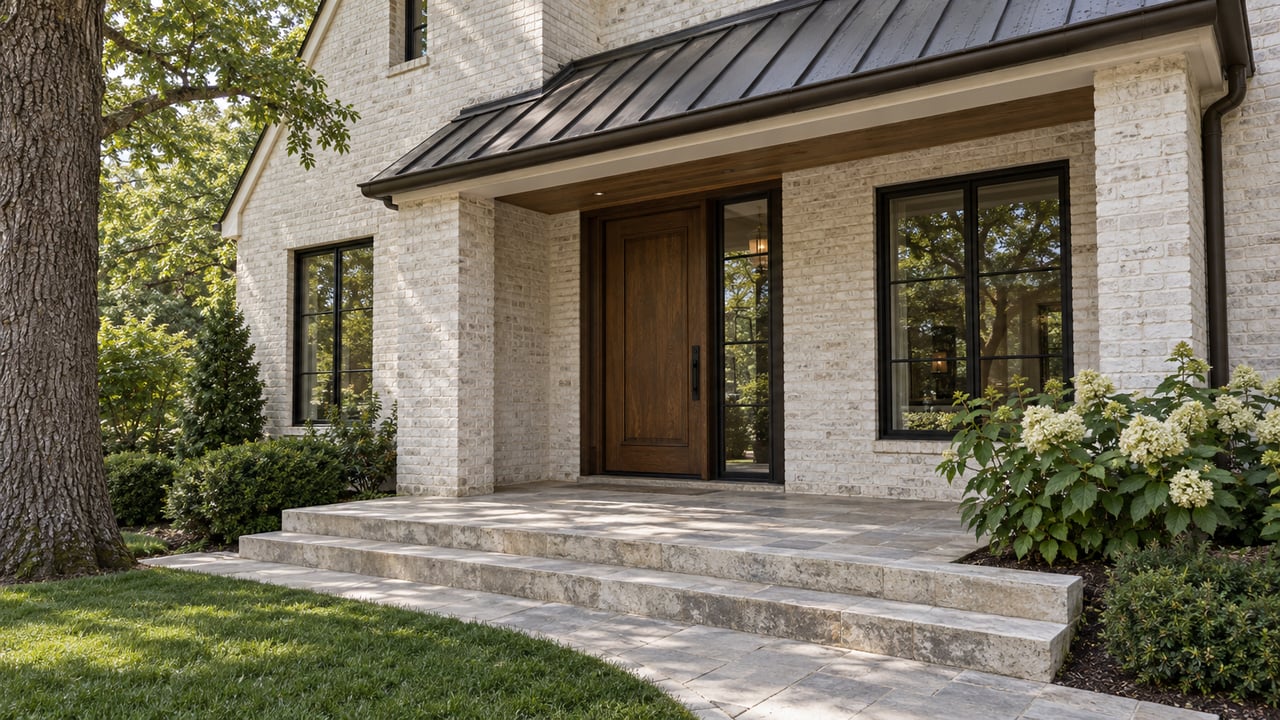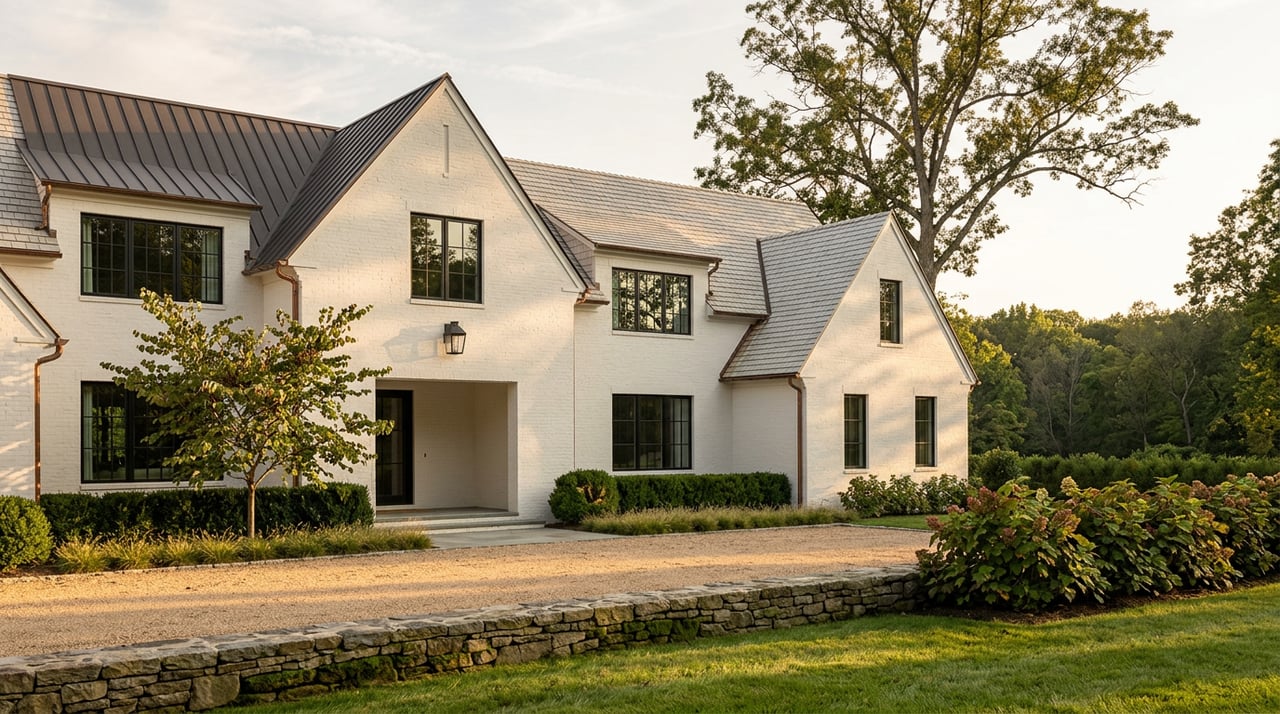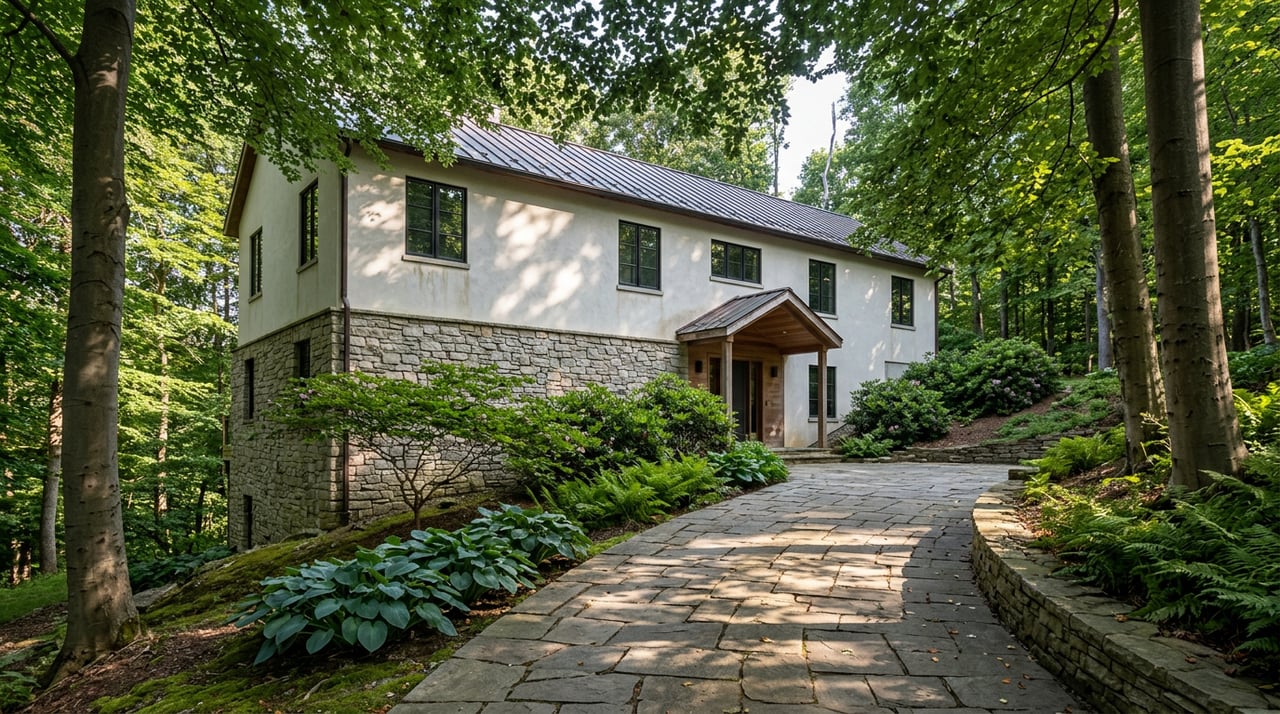
For most of its history, Forest Hills has built things to keep them apart. The city was incorporated in 1957 specifically so it could set its own zoning rules, and those rules have held: no commercial development, no multi-family housing, no through streets built for anything but the houses on them. Even the roads reflect the instinct. Long stretches of Tyne Boulevard were designed without sidewalks, because a sidewalk implies foot traffic headed somewhere, and somewhere else was never really the point.
So it's a small but real shift that the biggest infrastructure project in the city right now is doing the opposite. The Tyne Boulevard Pathway Project is being built to connect two pieces of Forest Hills that have existed for years without ever touching each other. That's not a routine paving update. It's the first time in a while the city has spent money closing a gap instead of marking one.
A City Built on What It Left Out
Forest Hills is one of a handful of Davidson County "satellite cities," places that kept their own charters when Nashville and the county consolidated governments in 1963 rather than folding into Metro. That independence came with a tradeoff residents still live with today. The city doesn't run its own garbage service; homeowners arrange and pay for private trash pickup themselves. What Forest Hills does provide, directly, is road maintenance, stormwater management, and chipper service for yard debris, the kind of low-visibility infrastructure that keeps a hilly, heavily wooded 9.3-square-mile city functioning without looking like it's trying to functional at all.
That same instinct shows up architecturally. Stone entrance columns mark the boundary of many Forest Hills streets, and the city is currently finishing the last set of them at the entrance to Kingsbury Drive off Old Hickory Boulevard, matching the style used elsewhere in the city. They're not decorative flourishes. They're boundary markers, built to tell you when you've crossed from somewhere else into here.
For seventy years, that's been the whole design philosophy: mark the edges, keep the inside quiet, and let everything inside stay disconnected from everything else inside. Which is what makes the pathway project worth paying attention to. It's the first major move in the other direction.
The Three-Quarter-Mile Fix
The Tyne Boulevard Pathway Project will run ten feet wide for three-quarters of a mile, starting at the intersection of Tyne Boulevard and Hillsboro Pike and ending at Tyne Boulevard and Robert E. Lee Drive. The city secured the funding through a TDOT Transportation Alternative Program grant, and once it's built, it will link the bike lanes already running along Hillsboro Pike to the John C. Lovell Bikeway on Otter Creek Road, a 1.5-mile path that has run from Percy Priest Elementary to Radnor Lake for years without a real connection back to the rest of the city's bike infrastructure.
That gap has been the practical problem all along. Hillsboro Pike had bike lanes. Otter Creek Road had a bikeway. Neither one got you to the other without doubling back onto a road with no shoulder and no sidewalk, which meant two decent pieces of infrastructure sat three-quarters of a mile apart and functionally useless to each other. The pathway closes that distance for the first time.
City officials describe the pathway as something that has been discussed for years before finally becoming fundable, which tracks with how these projects tend to move in Forest Hills. The zoning that protects the city's lot sizes and canopy is the same zoning that makes it slow to add new infrastructure, even infrastructure residents want. A three-quarter-mile bike connection took actual grant money and years of planning to happen, in a city where nothing gets built quickly on purpose.
The Older Projects That Already Tried This
The pathway isn't the first time Forest Hills has flirted with connection. It's just the first time the connection got funded.
Bison Meadow, the 2.5-acre wildflower park the city established in 1994 as a Tennessee Bicentennial project, sits on a terminal branch of the historic Natchez Trace, the same route Native Americans and early settlers used, and that bison and elk once used before them to reach a salt lick on the Cumberland River. The topiary bison shrubs that mark the park have been a quiet neighborhood landmark for three decades, tucked just off Hillsboro Pike with parking so small most people who drive past have no idea it's there. It was built as a self-contained tribute, not a connector to anything else.
Across town, Aaittafama' Archaeological Park sits directly across Old Hickory Boulevard from Forest Hills City Hall, on the site of a Mississippian-period village that housed roughly sixty families before something, a fire, an attack, no one knows for certain, caused the town to be abandoned around 1450. The site was discovered by accident in 1999, when TDOT archaeologist Gary Barker found evidence of the village during a proposed turn-lane project at Hillsboro Road and Old Hickory Boulevard. A Friends group raised $400,000 to help Metro Nashville purchase the seven-acre property in 2014, with $100,000 of that coming from the City of Forest Hills itself.
The park's name carries the same theme the pathway project is only now acting on.
"They suggested Aaittafama', which translates to a place for meeting together in the Chickasaw Muskegon language," former Forest Hills mayor Bill Coke told WPLN. "We hope that when completed it will become a place for meeting together."
The site's master plan calls for walking trails leading visitors between points of interest inside the park, plus a proposed future connection to Brentwood's greenway system. That connection has been on the drawing board for over a decade. It still isn't built. The village's own name has meant "gathering place" since long before Forest Hills existed, and the physical park built around it has spent most of that time gathering nothing beyond its own boundary.
Why January Made the Case for Connection
The winter storm that hit Middle Tennessee in late January 2026 gave the isolation argument a harder edge. WSMV crews found massive downed trees, power lines, and poles littering Granny White Pike near Travelers Ridge Drive, and the damage was significant enough that the National Guard was called in to assist with cleanup, bringing heavy equipment and chainsaws. A cleanup crew came in from Georgia to help clear the roads.
Storm response in a city with narrow, winding, tree-canopied roads and no sidewalk network is a different logistical problem than storm response somewhere with a grid. When Granny White Pike goes down, there often isn't a parallel route that picks up the slack, because Forest Hills was never built with parallel routes in mind. That's part of what makes a project like the Tyne Boulevard Pathway matter beyond recreation. A ten-foot path that connects two points that previously required a car and a detour is also, quietly, a second way through.
What's Already Here, Waiting to Be Linked Up
None of this is happening in a vacuum. Forest Hills residents already have real assets within the city limits, they've just tended to function as separate destinations rather than a connected system:
- The John C. Lovell Bikeway, 1.5 miles from Percy Priest Elementary to Radnor Lake
- Bison Meadow's 2.5 acres of wildflowers and native grasses off Hillsboro Pike
- Aaittafama' Archaeological Park, directly across from City Hall
- Richland Country Club, whose golf course sits on 170 acres that include a former Battle of Nashville site
- Sequoia Swim and Tennis Club, a neighborhood recreation fixture for families
Every one of these has existed for years. What's new is a city government spending real grant money to make the space between them shorter.
The Pattern, Named
Add it up and the through-line is clear. Forest Hills spent seven decades building a city defined by separation: separate zoning from Metro, separate recreational assets that don't touch, separate roads with no shoulder for anyone not in a car, stone columns marking exactly where the separation begins. The Tyne Boulevard Pathway Project is the first time that instinct has been overridden with actual funding, not just a master plan sitting in a drawer next to Aaittafama's decade-old greenway proposal.
It's one project. Three-quarters of a mile. But it's the first evidence that the next chapter of Forest Hills might be less about the walls and more about what happens when a resident can finally walk or bike from one side of the city to the other without a car.
If you're already living this stretch of Nashville and want to keep track of what's actually changing on the ground here, from new infrastructure to the neighborhoods around it, Nashville Luxury Homes keeps a close eye on Forest Hills and the rest of Middle Tennessee's most established communities. Reach out any time you want a local read on what's happening next door.